
Fire glass, lava rock and firestone all do the same basic job in a gas fire pit: they conceal the burner and shape how the flame reads. Fire glass is the most decorative and the most expensive. Lava rock is the most natural looking and the cheapest. Firestone is a manufactured refractory stone that avoids the popping natural lava rock can suffer if it is damp at ignition. On propane, keep whichever you choose in a shallow layer.
What each topping is
Fire glass
Also known as fire beads or fire crystals, fire glass is tempered glass available in a wide range of colors and shapes. It reflects and enhances the flame, which makes it the most contemporary and decorative of the three options.
Lava rock
Lava rock, also called lava stone or volcanic rock, is quarried natural stone. It is porous, which lets it absorb and radiate heat well, and it comes in earthy tones from black and brown through to red. Its porosity is also its weak point: if lava rock is wet when the burner is lit, trapped moisture can cause the stone to pop.
Firestone
Firestone is a refractory stone kiln-dried at 600 degrees Celsius specifically to withstand the heat of a gas fire pit. Because it is manufactured rather than quarried, it does not carry lava rock’s popping risk, and it can be arranged deliberately to shape the flame. You can read more in our guide to lava rock and firestone.
Aesthetics
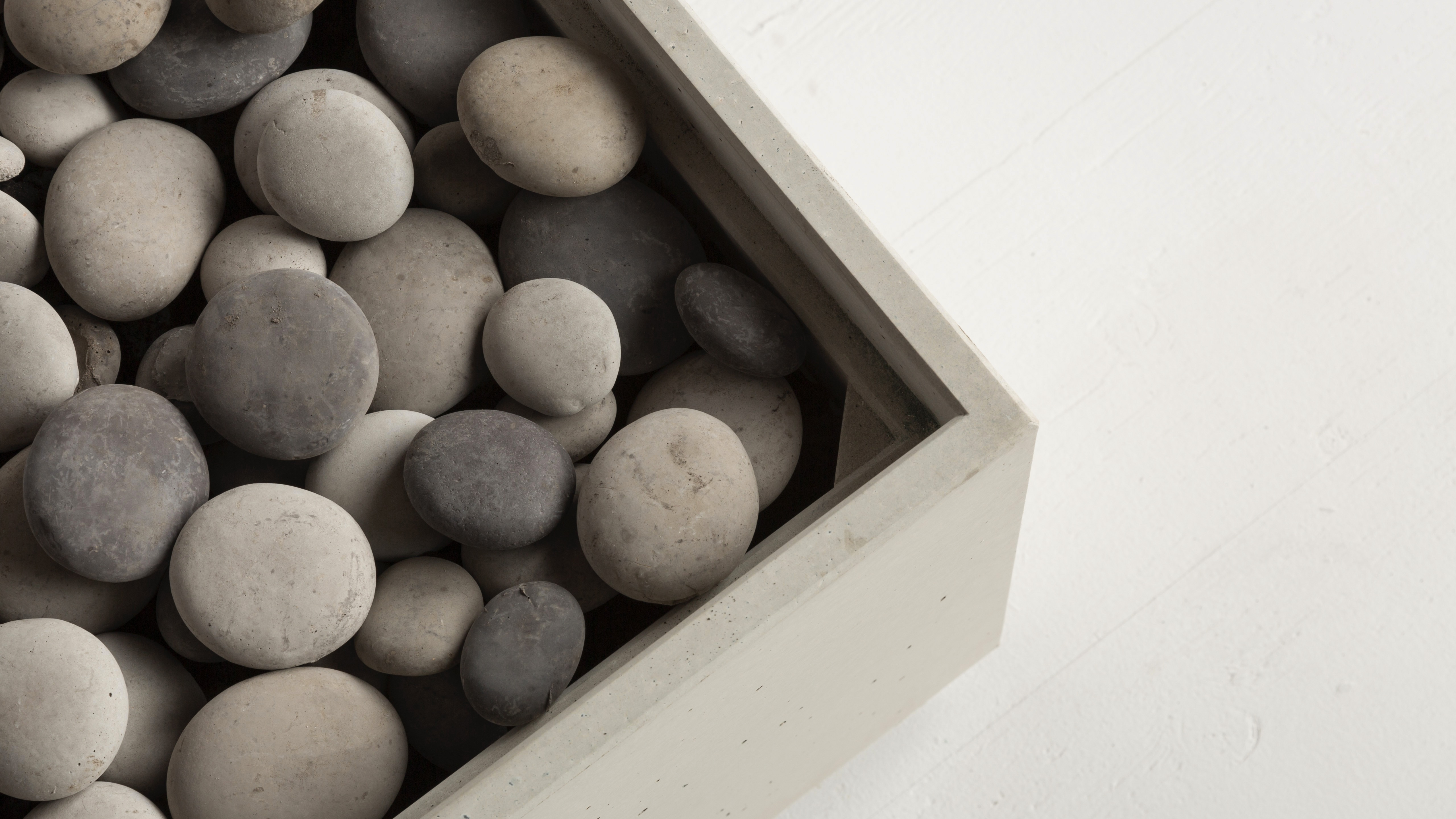
Fire glass gives the most modern, jewel-like finish and offers the widest choice of color. Lava rock suits rustic and planted settings, where its natural texture reads as part of the landscape. Firestone sits between the two: manufactured and consistent, but stone-like rather than glassy, and arranged to accentuate the flame.
Heat distribution
Fire glass does not absorb and radiate heat efficiently, so it reflects little of the heat produced by the flames until the unit has been running for some time. Once heated, fire glass holds that heat for an extended period after the fire has been extinguished. Be wary of fitting a fabric cover until you are certain the fire pit is cold to the touch, to avoid scorching the cover.
Lava rock absorbs heat and releases it gradually, which contributes to a cozy atmosphere. It does not hold that heat as long as fire glass, so it cools down faster once the burner is switched off. Firestone behaves similarly to lava rock, holding and releasing heat steadily without the moisture risk.
Safety with propane
Propane is heavier than air. If a leak occurs, propane can sink into the fire pit and become trapped beneath a deep layer of topping, where it may ignite. Keep the layer shallow on propane units, whichever topping you use. Natural gas is lighter than air and does not sink in this way.
With lava rock there is a second consideration. Because the stone is porous it can absorb rainwater, and lighting a burner under wet lava rock can cause stones to pop. Fire glass and firestone are not porous in the same way.
Maintenance
Fire glass is generally low maintenance, producing no ash, soot or debris, and cleaning is a matter of rinsing or wiping down. Lava rock may accumulate ash and debris over time and needs regular cleaning to keep its appearance. Firestone sits closer to fire glass, needing periodic cleaning and inspection rather than frequent attention. In every case, exercise caution when cleaning around propane connections.
Cost
Fire glass is considerably more expensive than lava rock, with costs varying by type, color and brand. Many owners find the appearance and low maintenance worth the difference. Lava rock is the most budget-friendly of the three. Firestone is a manufactured refractory product rather than a quarried one, and is priced accordingly.
Which should you choose?
Choose fire glass if appearance is the priority and you want a contemporary, reflective finish. Choose lava rock if you want a natural look at the lowest cost and you are able to keep it dry, or cover the fire pit between uses. Choose firestone if you want the look of stone with the reliability of a manufactured product, particularly on a propane installation or in a wet climate.
All three are available through our fire pit accessories range.